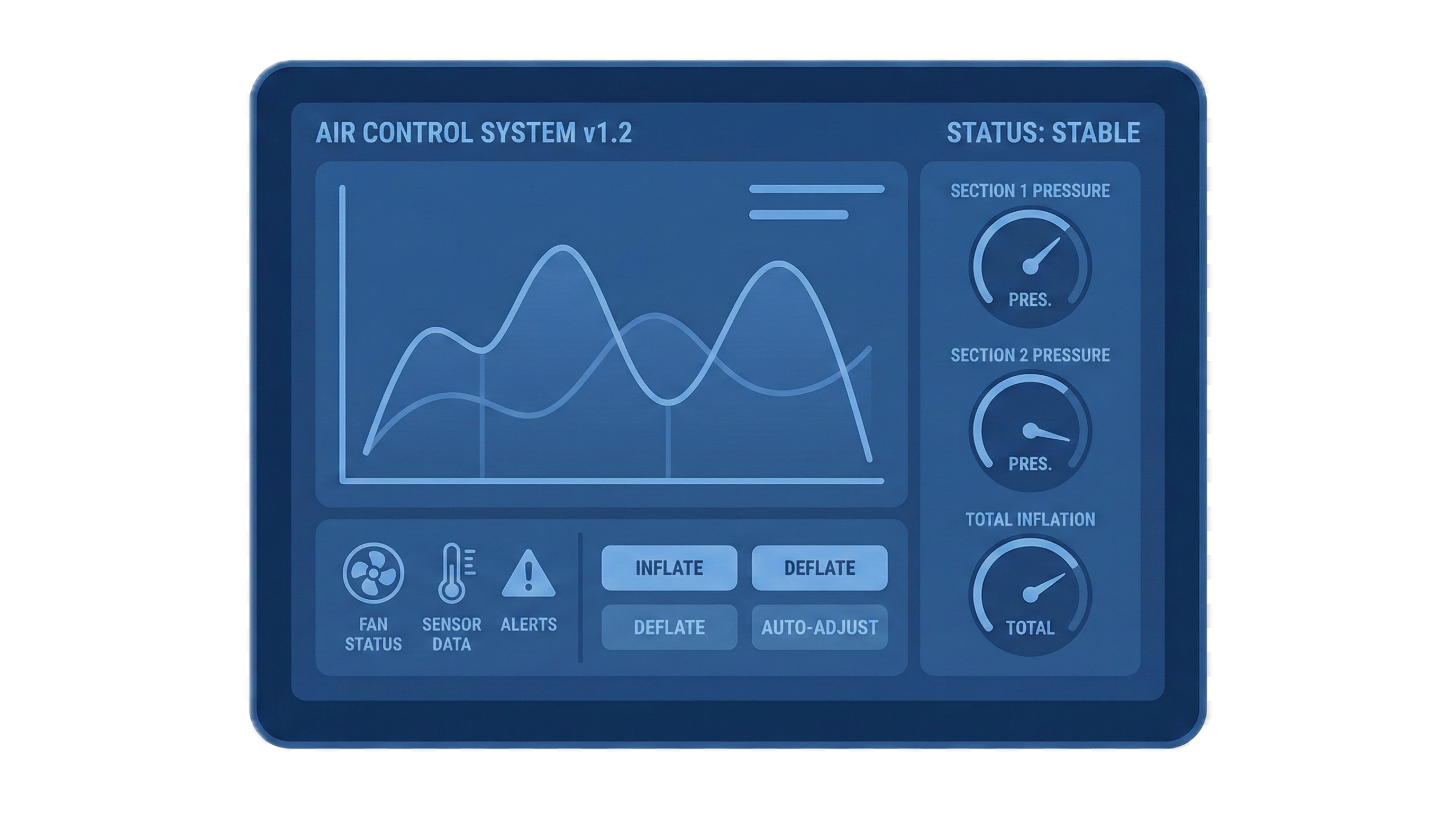
System initialization...
System initialization...
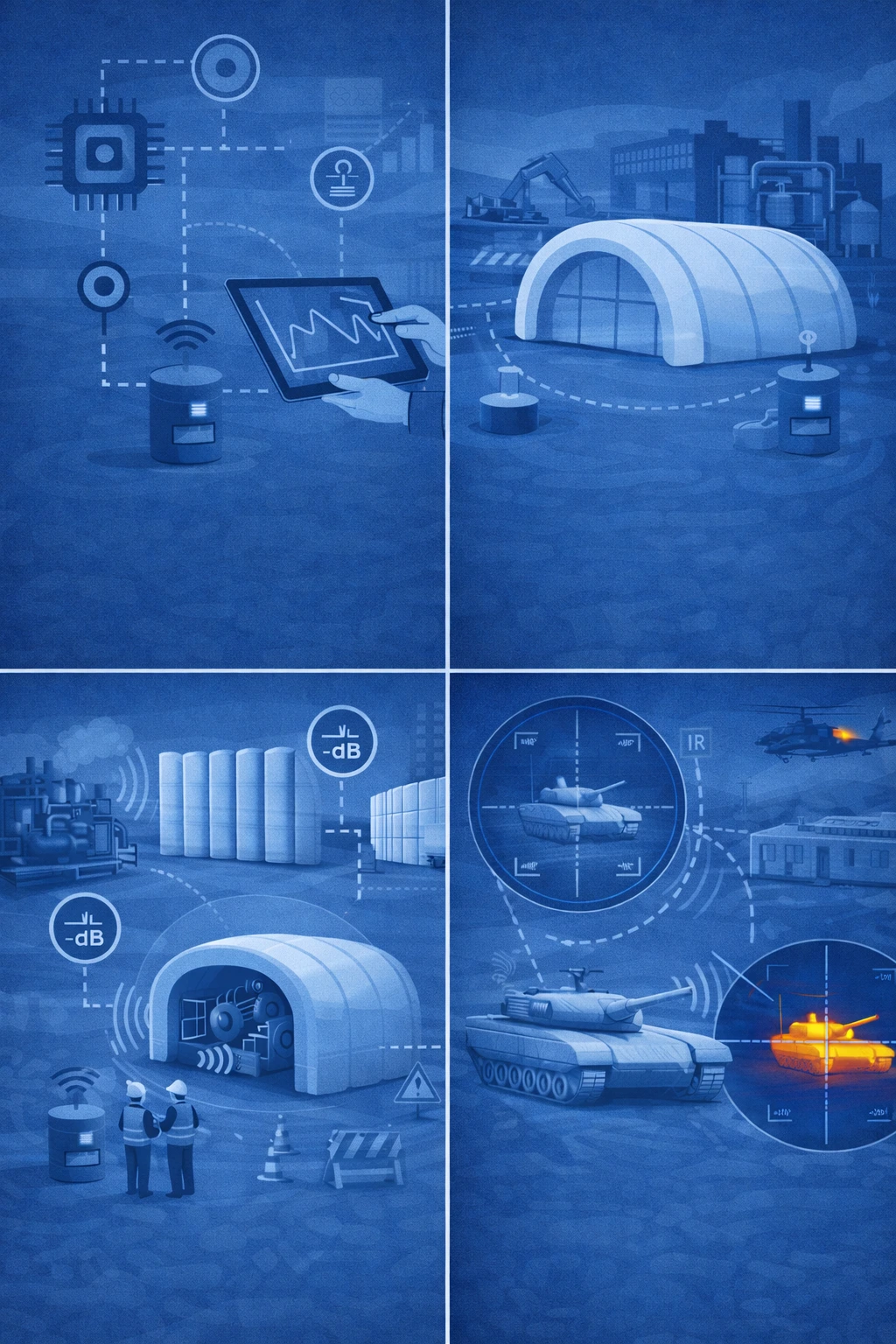
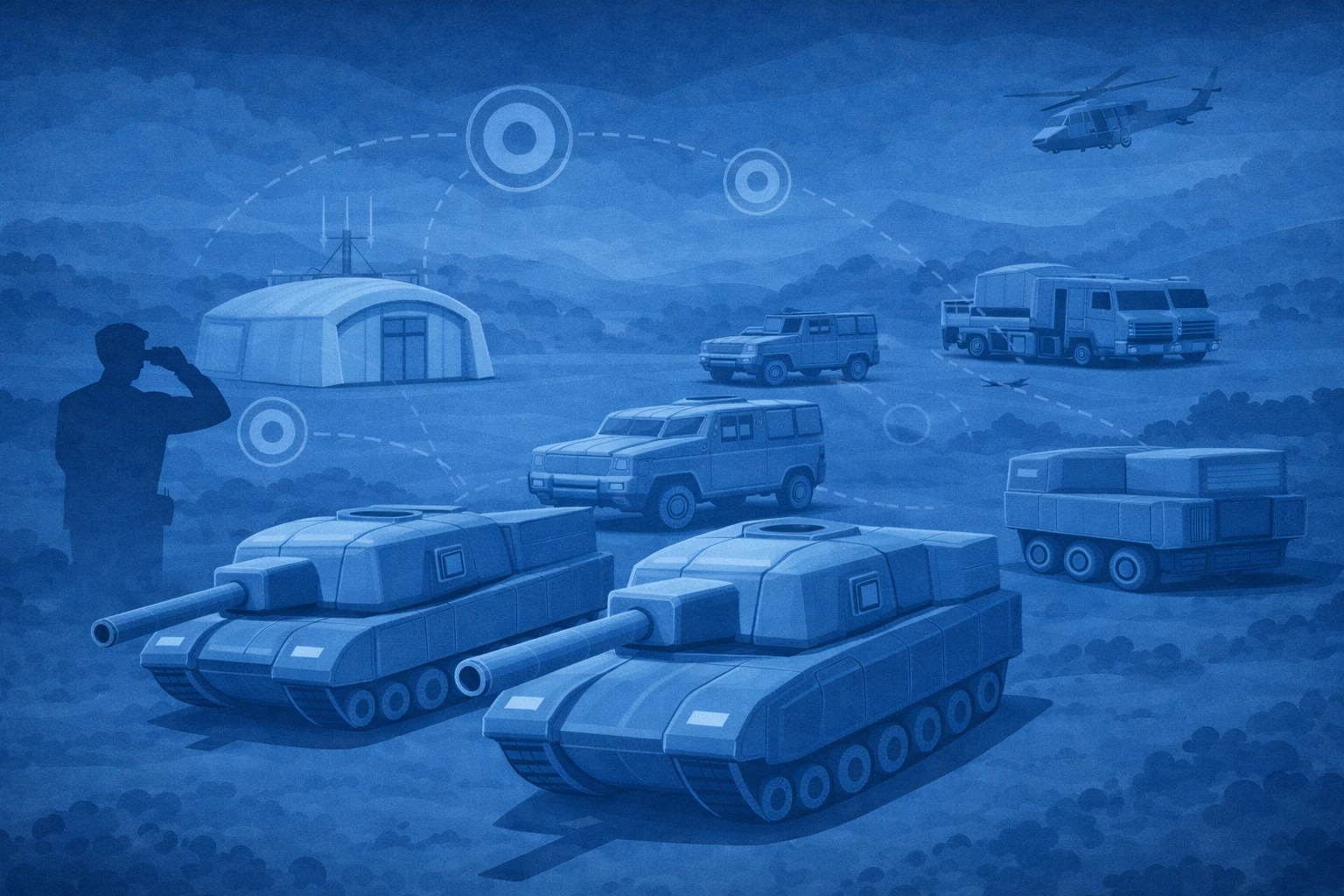
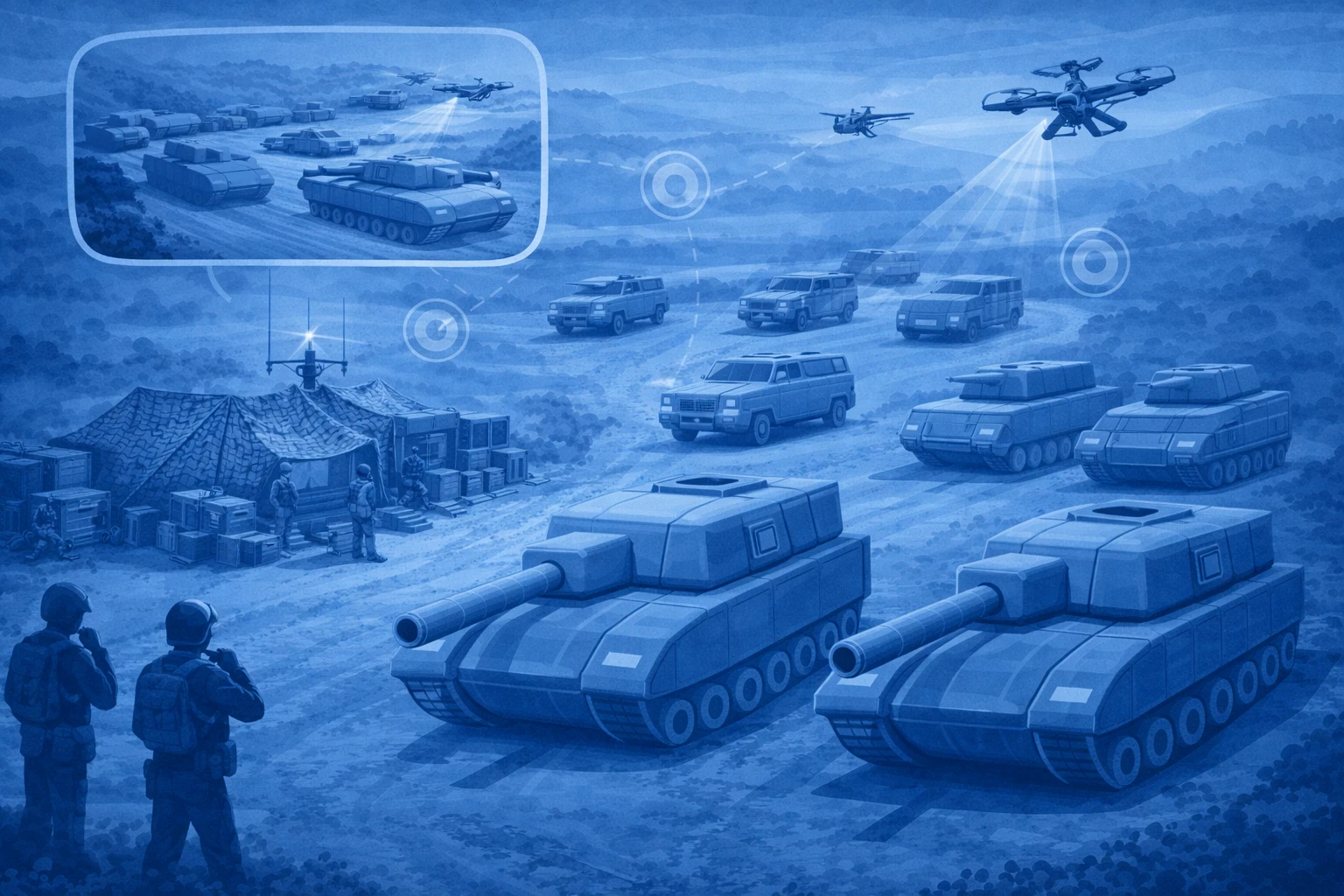
Geometric credibility is decisive. Inflatable tank decoys reproduce the proportions, volumes and characteristic lines of armoured vehicles to ensure consistent interpretation from the ground, from the air or via stand-off imagery.
These decoys contribute to tactical deception. They help create fictitious vehicle concentrations, simulate armoured units or divert attention away from real targets during exercises or operations.
Inflatables enable immediate responsiveness. Easy to transport and quick to install, simulated military vehicles can be deployed, moved or removed as scenarios evolve.
Structures are designed for field use. Mechanical resistance, repairability, stability and a low logistics footprint ensure durable operation during repeated exercises or temporary deployments.
Inflatable armoured-vehicle decoys make it possible to simulate a credible military force without committing real assets. They are used for training, planning, scenario demonstrations and indirect protection.
They meet concrete needs: maneuver exercises, joint-force training, deployment simulation, saturation of observation capabilities, protection of real units or preparation of complex scenarios.
Effective integration starts with proper scoping: simulated vehicle type, observation distances, deployment duration, environmental conditions, transport constraints and expected realism level.
These solutions support a long-term approach: repeatability of exercises, scenario adaptability, simplified maintenance and the ability to offer multiple vehicle models within the same range.

Create a coherent visual presence to represent an armoured unit without mobilising real vehicles.

Multiply points of interest to divert attention, complicate analysis and protect real assets.

Ideal for repeatable scenarios, operational preparation and institutional exercises.
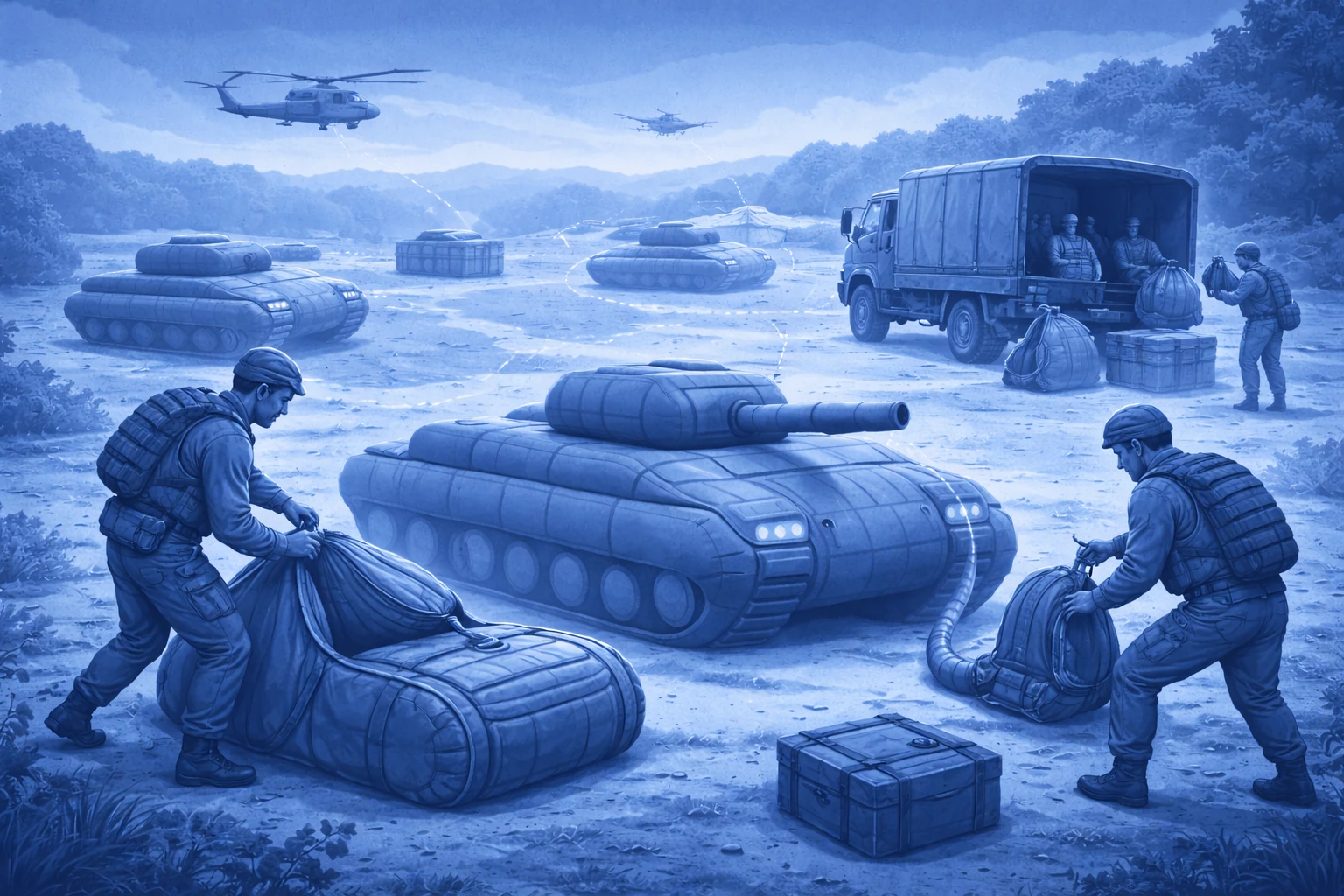
A transportable solution that is quick to set up, adapted to changing field conditions and evolving scenarios.
We develop military vehicle decoys with a rigorous, technical and field-oriented approach. The goal: deliver a credible, robust and operational solution, while controlling deployment logistics and ensuring repeatability for exercises.
Identify the tank or military vehicle type to reproduce, its operational role, its key dimensions and the observation conditions.
Define the required fidelity level and deployment constraints.
Integrate the characteristic volumes, stability, anchoring points and field-suited materials to achieve a credible and robust replica.
Include transport, inflation, operational safety and maintenance constraints from the design stage.
Test visual rendering, stability, resistance and ease of deployment.
Adjust before series production or multi-model rollouts.
Designing military vehicle decoys requires a combination of engineering, operational understanding and mastery of inflatable structures.
Reproduce complex volumes, credible proportions and coherent reading lines according to observation distances and angles.
Stability, mechanical resistance, anchoring, repairability and materials adapted to real operating conditions.
Ensure consistency across design, manufacturing, field trials and operations, while enabling model evolution.
Cost and lead time depend on the simulated vehicle type, level of detail and production volume (study, design, prototype, field trials, production).
Do you need inflatable tank decoys, simulated military vehicles or tactical platforms? Share your context and objectives — we will propose a tailored, structured and operational solution.